
Reviewing the first ten episodes of The Magnus Archives (2016-2021)
Short and sweet.

Before we begin, don’t worry, I’m not converting Hellish Views to a TMA blog - this is just a little passion project. I have plenty of horror movie content lined up.
Moving on - this piece is a more entry-level post than my recent (spoilerific) essay. Each episode is generally around the thirty minute mark, so it’s not an insane investment if you want to give listening to ‘em a go. To get through every one I’m covering here would be around five hours listening to this in the background - minus all the adverts and credits.
Anyway, I’ll structure this article so that you can avoid spoilers for future eps. You could listen to all the episodes back to back, or do one a day - but however you do it, I hope you have fun, and share your thoughts in the comments.
With all that out the way, let’s dig into the opening quarter of the first season of The Magnus Archives.
Warning - each review spoils the episode I’m covering - but only that episode (and any relevant ones that preceded it). Also, T/W for insect pictures.
Episode 1. Angler Fish.
Angler Fish is a strong start. We get a sense for our narrator, Jonathan Simms - for his manner, his role in the story, and how the structure of each episode will be laid out. Our first statement is genuinely spooky - detailed enough to suck you in, but with a legitimately chilling twist towards the end. The details of the locations do a lot of work, I reckon.
Also, the image of a body floating limply a few centimetres off the ground, obscured slightly in a dark alley at night, is a memorable one, to say the least. The light that draws in smaller fish.
The final fact-dump of disappearances is freaky shit too. Six people gone missing. One strange picture of an ‘apparently empty alleyway’ - that, on further inspection, seems to hold a monstrous beckoning hand in the dark. It’s not the most inventive bit of horror in the world, but it certainly leaves you a little unnerved, as well as intrigued.

Episode 2. Do Not Open.
Do Not Open is one of the stronger episodes in this starting ten. The statement-giver, Joshua, is quite likeable, ordinary and intelligent. He delivers his story compellingly, leaving out few details but keeping it semi-believeable. You don’t doubt the veracity of his anecdote the way you might doubt Nathan’s in the pilot. Anyway, regardless of that, the coffin just sitting in his flat is a haunting concept, and that spins right from creepy to pure nightmare fuel as his night-time wanderings give way to horrible sounds emanating from the box. The final reveal that he has been living alone in his building is a subtle but effective shock, also. It all comes together nicely for a neat little horror short.

Episode 3. Across the Street.
Across the Street is more strange than scary until quite far through. Graham is odd, rather than unnerving. However, when the mysterious stranger that replaces him starts staring into our protagonist’s window, it’s instantly a horror-show. This is around the 22 minute mark - very close to the end. Then it happens night after night and the dread kicks in completely. Amy Patel is not found killed following the statement, though, from what we’re told, so, relatively, it could’ve been worse. The episode has a good buildup, with two decent moments of horror, but overall, it’s slightly weaker than the previous two.

Episode 4. Page Turner.
Page Turner is a layered listen. There is a lot going on, but it is genuinely creepy at times. The Keays stick with you, even after you’ve finished listening, and Dominic’s fear permeates much of the narration. It is an odd narrative, but nonetheless enjoyable and interesting. You are left with a lot of questions, but not in a frustrating way. The prose is strong here, and there are several rich descriptions. A solid episode.

Episode 5. Thrown Away.
Thrown Away is one that Pale Horse🩸 mentioned as enjoying. It is a goodun, though a bit all-over-the-place at times. Still, sometimes weird horror really works. A bag of doll’s heads, a bag of teeth, it’s some pretty bizarre shit on show here. What I find excellent about this episode is the characterisation of Keiran Woodward - he really feels like a real person - and while many of the statement givers do, he stands out for me somehow. His reactions and delivery feel honest and real.
Our post-statement fact-file leaves us a little dry, despite the teeth all being identical. This fact is less scary than it is just confusing. Not the strongest ending, personally.

Episode 6. Squirm.
Squirm is a classic. Harriet’s panic. Timothy’s uncertainty and confusion. The introduction of Jane Prentiss. It’s all fantastic. The reveal that Harriet has burst into worms is fucked.
The phrase ‘pitted, warped flesh’ is rough, and it doesn’t get any less grim. What makes all this even scarier is Jon sharing with us that cases like these are something the Institute are already aware of. A solid confirmation of the supernatural feels significant, and frightening. You sense that there is more to follow this first horrible anecdote.

Episode 7. The Piper.
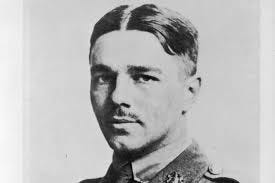
The Piper is our first foray into historical fiction. We get Wilfred Owen in this one, which is wild in itself. Not the last time we get a historical figure turning up. The trench experience is horrid enough even before the supernatural elements come into play, and when they do, we get a third serious monster. A multi-armed Thing - sinister and strange. It works well for the brutal setting.
The ending - where Wilfred hears the Piper, and then is killed, is a serious shock. The element of others hearing it is inspired too. This is a very good statement.
Episode 8. Burned Out.
Burned Out is another one that has a little too much going on for my liking. It starts strong, and as a standalone ghost story it works decently, but among all these other short stories it falls a little flat for me. The mysterious burning feeling Ivo feels is excellent, though. Still, I feel it is quite abstract in its scares.

Episode 9. A Father’s Love.
A Father’s Love is very interesting. Supernatural serial killer horror is a bold and fun mix. There is a lot to appreciate here - the time-span of the story we’re related, the image of the glowing hearts in their glass jars, the disappearance of Mrs Montork. These elements come together to support an enjoyable horror short. Julia being a child in the statement adds a level of emotional turmoil to the story different to what we’ve had so far.

Episode 10. Vampire Killer.
Vampire Killer is a banger. Trevor is rough and tough - an older homeless person, struggling with addiction and other illness, who dies immediately after the statement is given. His life story is realistically grim, and his dedication to hunting vampires is to be admired. The tale of his brother’s death is some scary, nasty shit. The vampire is reinvented here in a fantastic new way - a telepathic thing that lures people into the dark to exsanguinate them doesn’t sound that different to the usual - but their total silence, the image of the distended belly as the blood seeps from its victims, it makes for a truly awesome and legitimately frightening new monster. Inventive stuff.

So, that was my very brief thoughts on the first ten episodes. I’ll happily follow up with statements 11-20 if this gets a reasonable amount of interest. If not, I might just do more thorough reviews of a few absolute classics.
On the above, I’d really appreciate some feedback here. Was this a reasonable length review for each episode? Would you prefer deep dives on a select few, rather than concise thoughts on every statement? Let me know.
Anyway, either way, I hope you enjoyed reading,
Until next time,
H.E.
I have a trip to Canada coming up, and will listen to these on the airplane!
I would request that you start a second account and just deep dive each episode one at a time- but I know you’re busy enough with this one 😂 11-20 has some all-timers, for me, so I’m obviously here for that.
If you were gonna do mini reviews for each ep in order (like this post) but ONLY bangers, where would you stop?