
BBC Ghost Stories For Christmas - Subscriber Recommendations
A View From A Hill (2005) and Martin's Close (2019)

This article is a bonus post for my BBC Ghost Stories For Christmas project, where I will be covering two films from the rebooted series.
Firstly, A View From A Hill (2005) – recommended by George R. Galuschak As you might expect, it’s based on a story by M.R James. This particular film was directed by Luke Watson and written by Peter Harness. Interestingly, both this and the 2025 ghost story (The Room in the Tower) changed the source material and moved their respective settings to the 1940s. Why, I’m not sure, but it works well for the overall tone and feel – this film we’re covering now also changed the season it’s set in from Summer to Autumn – a welcome change as it’s a spookier season.
A View From A Hill stars Mark Letheren as the hapless Fanshawe, an employee of the Fitzwilliam museum, and qualified archaeologist. We open on darkness, with muted birdsong serving as a soundtrack. Fanshawe stands alone on an empty platform, looking impatient. Soon he is riding through the countryside on his bicycle but, only for a moment, is briefly delayed by a dropped briefcase. Little does he know, this small accident will kickstart a series of life-changing events.
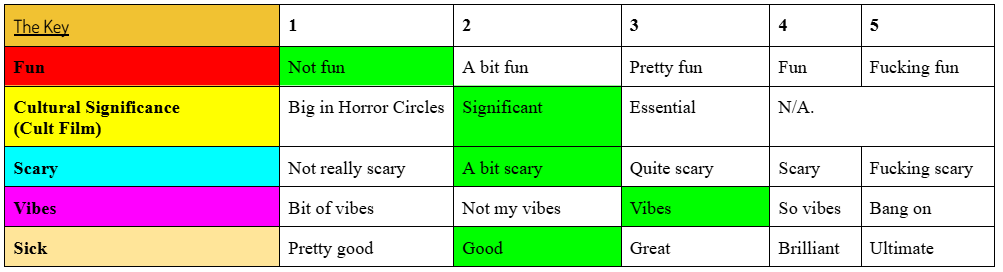
Total Score: 10/23.
Soon he arrives at the home of aristocrat Richards. He is here to collect artifacts for his employer, Professor Wilson. This old home feels distinctly empty, bar the posh (and rather twatty) Richards and his grim manservant Patten.
We soon discover that Fanshawe’s binoculars have been smashed – remember that dropped case? – so he borrows some from a private collection. More on this later.
Richards and Fanshawe pop out on a nice Autumnal walk. Our man shares that he is a city fellow, unused to the silence of the woods. On reaching the eponymous hill, we see that this area is a very English space. Old abbeys, weathered ruins and cosy pubs. Bizarrely, and significantly, Fanshawe seemingly mistakes some distant ruins for an intact building.
Birdsong follows us everywhere.
Fanshawe, it seems, is hearing voices.
At dinner, Professor Wilson comes up. He and Richards know each other well, apparently. The vibe is awkward, here. We learn that Patten works for free - depressing. The host is really quite rude to Fanshawe, who takes it well, but bristles nonetheless.
Fanshawe’s wine glass is cracked. This subtly puts us in mind of his binoculars. Soon we learn more about the owner of the borrowed set. They were designed by an amateur archaeologist, a strange local watchmaker by the name of Baxter. He was not well-liked but was a talented sketcher – and owned a really quite spooky half-skull mask.
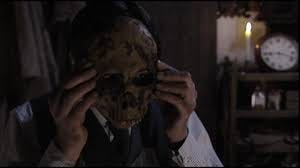
Soon Fanshawe and Patten are alone in the old house. The old servant clearly cares for the place deeply.
Fanshawe is dreadfully distracted, examining Baxter’s sketches once again. He leaves to investigate them further, as they resemble the strange and apparently non-existent building he spotted through his binoculars. As he strides off, he notices Patten watching him from afar.
A note – the visuals of rural England in this film are familiar and comforting to me and capture the feeling of the location perfectly.
Soon enough Fanshawe arrives at the ruins. In the distance a mysterious figure watches him. He cycles away, but the figure follows. As it turns out, it looks to be just a normal rural chap – but it’s still a little nerve-wracking as the man swings two dead rabbits as he stomps past.
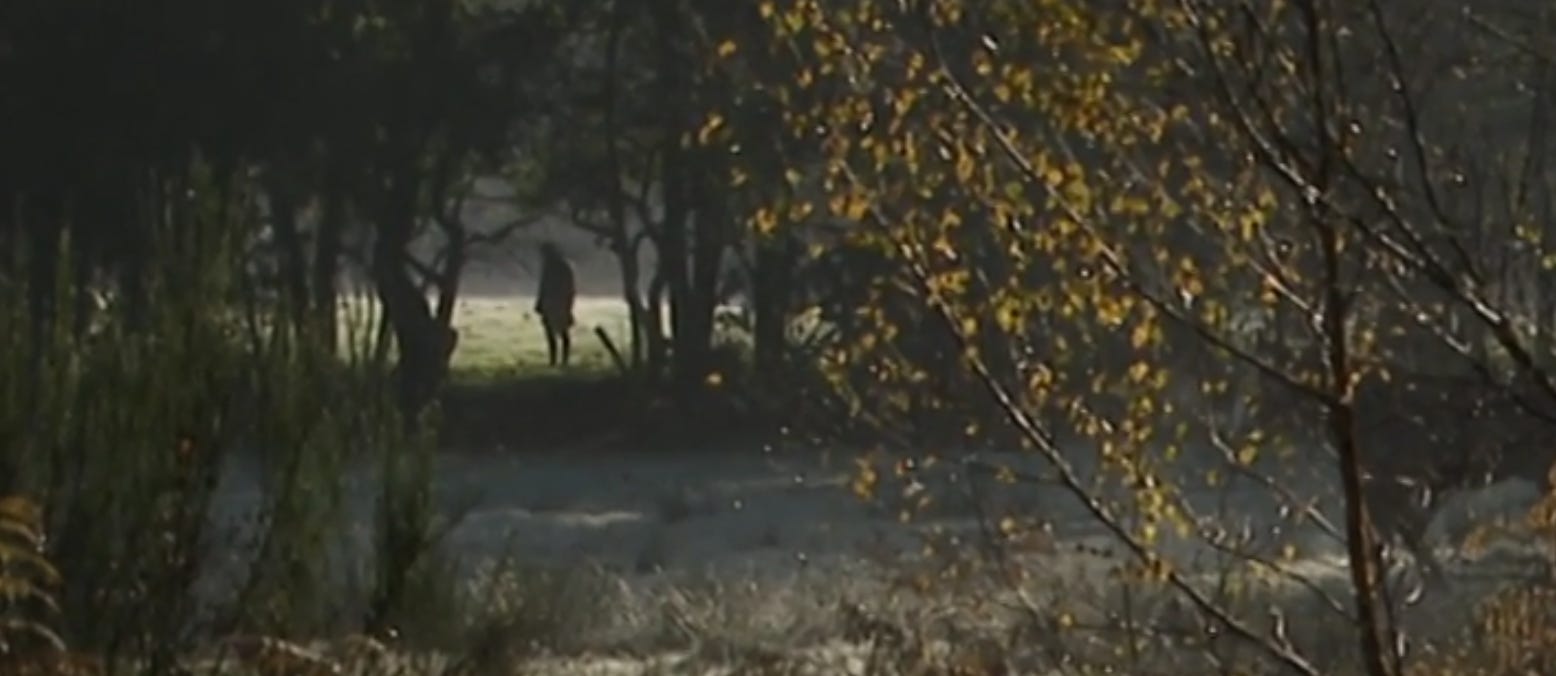
However, this man isn’t the last of it. Someone is definitely following Fanshawe. Then, at this crucial moment, he finds one of his bike tires is deflating. He begins to panic, and then someone seems to be right behind him – circling him. But no one is there. Our man combs his dark surroundings desperately with a torch but finds nothing. He rushes away, and finally music kicks in. He trips in the dark over a strange stone – one used to hold up gallows, as we’ll later discover. The camera is dizzying. Fanshawe collides with branches and bracken in his attempts to flee the scene. When he finally gets home, he is dishevelled and afraid. This is all very well-done.
He shares his experience with Richards and Patten. He questions if the poacher he saw was a ghost - whether the old abbey he spotted through the binoculars is even real. He even goes so far as to say that Gallows Hill feels ‘unnatural’.
This is a turning point - and exposition comes pouring in. Patten shares that the binoculars are partially made from human bones (What The Fuck), and that Baxter, the maker, was ‘peculiar’ (an understatement), and eventually went missing (Yikes).
Unsurprisingly Richards reckons this is all bullshit. Patten does try later in the evening to restart the conversation, when it is just he and Fanshawe, but the man is too nervous and shuts him out.
In the dead of night, our man goes for water. He finds it murky. Something is lurking in the shadow of the bathroom. As it steps into the light, we see a familiar mask on its face.
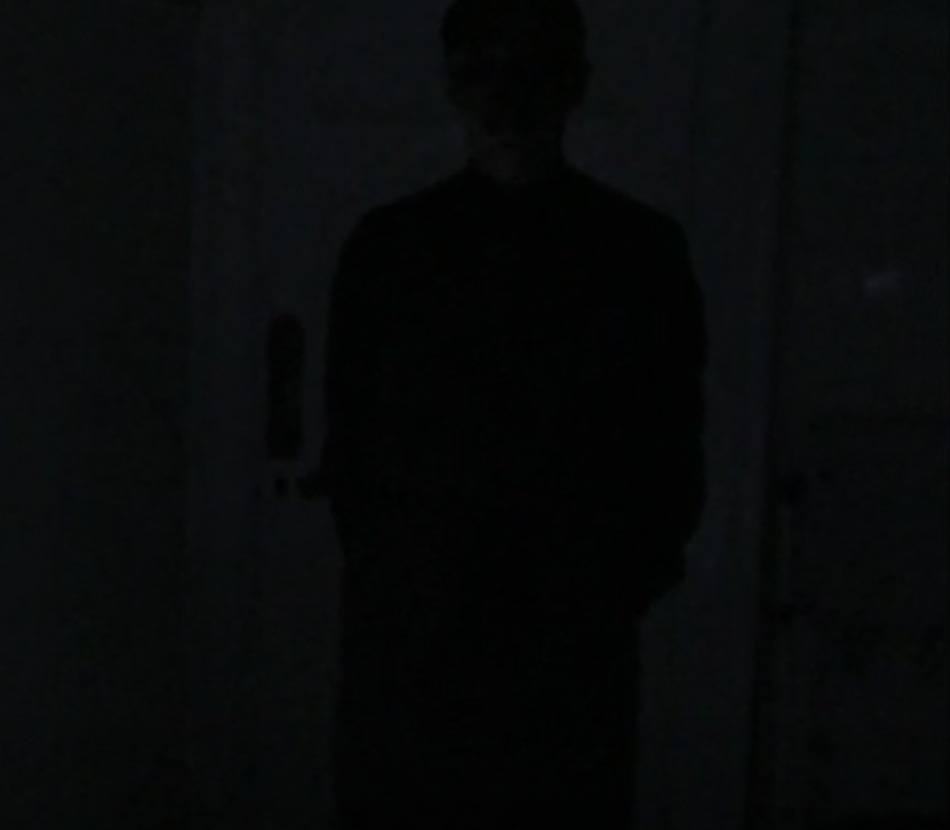
Fanshawe awakes in a panic. Was it only a dream? He breathes shakily, but then… creaking.
The next morning, we see a raptor circling the skies. The church is clearly visible through the binoculars, and Fanshawe decides he must go to the site and explore. When he arrives in that empty field and puts the glasses to his eyes, he is right there - it’s bizarre and supernatural. The structure is clear as day in front of him.
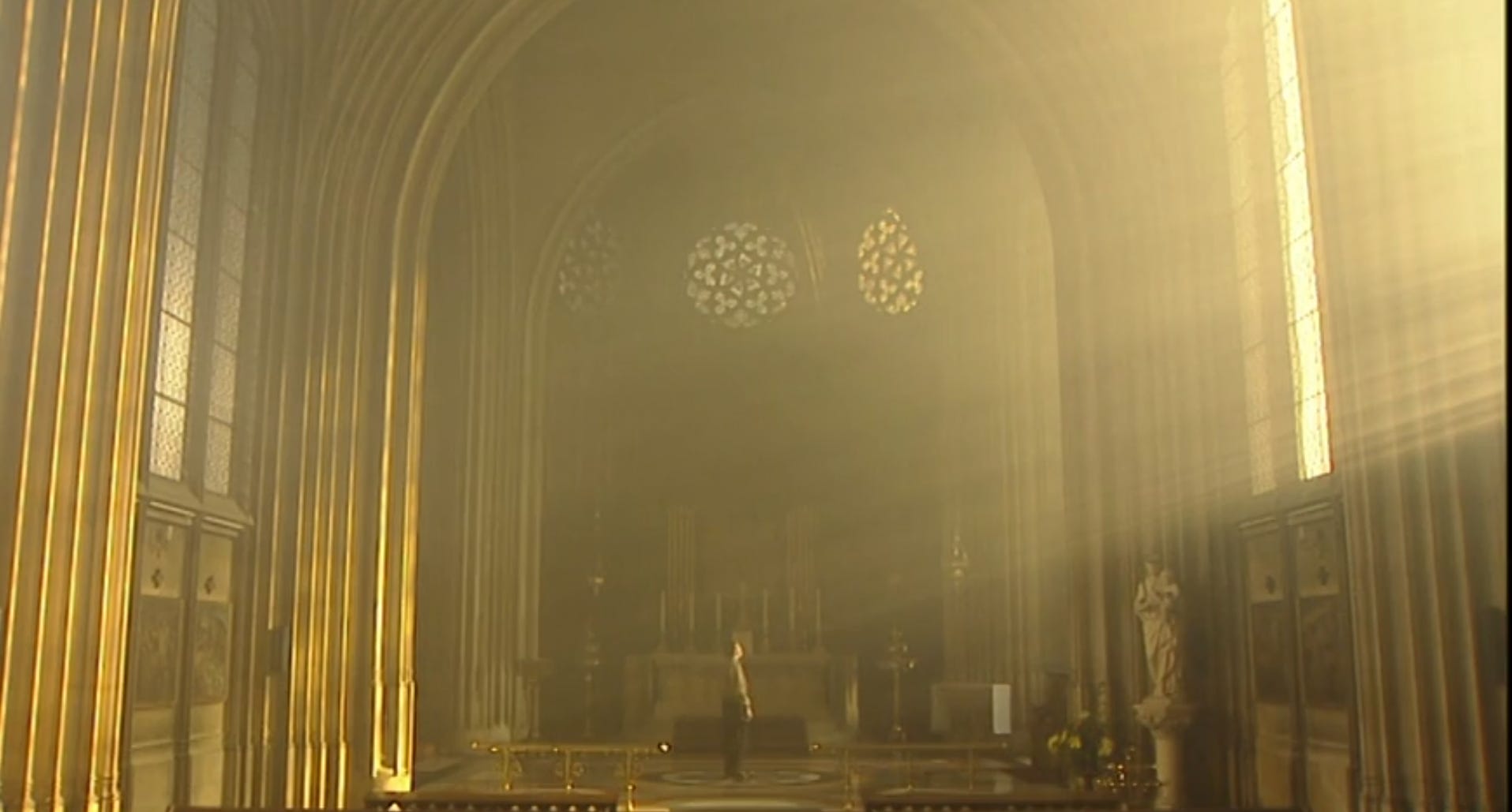
Soon he is inside, running his hands along the pews. It’s a beautiful place. He sketches it all, and we see the reality - a man sitting on a hunk of weathered stone. Then, within the building a face slides behind a pillar. Suddenly it draws right up close and Fanshawe drops the binoculars in terror. Something invisible pushes him to the ground, and in the distance, an ominous figure stands watching.
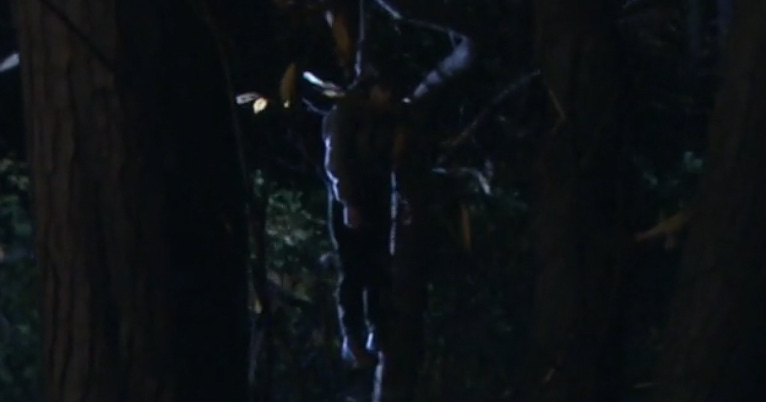
Later, it’s getting dark and someone is being dragged through the leafy undergrowth of Gallows Hill. Fanshawe. There is a full moon, and a search party, led by Richards, is combing the area for him. As I watched this episode, there was a full moon shining brightly through my window (the “Quiet Moon”, according to my lunar calendar).
Anyway, in the woods, gallows are rolled into place. Crows caw deafeningly overhead, expectant. When the search party finds him, Fanshawe has been strung up like a common criminal.
We get the raptor shot again, and that familiar birdsong. Shockingly Fanshawe is fine, bar some bruising. He stands with Richards on the train platform. Back at the house Patten is burning all the notes, and the damn binoculars too. Risky, if you ask me. Fanshawe takes a risk himself and begins to draw something, something that shouldn’t be drawn, but a noisy shriek from an unseen bird puts him off. For the best, I think.
Overall this had fun ideas, delivered well. I loved the scenes with the figures in the distance, and the stuff with the Church was excellent too. The characters were well-performed, and the visuals were chilling when they wanted to be. Given that it rebooted an iconic show, it’s definitely worth a watch, even if it isn’t the most exciting film ever. The ending is a lot quieter than a lot of the others, but it still has a hint of horror.
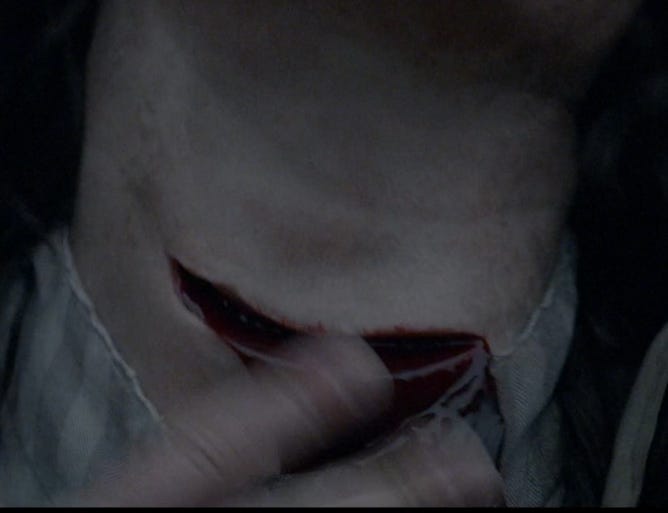
Now, Martin’s Close is a very different movie. Much more recent, for one thing, releasing in December of 2019. This was recommended by Meditations On Permafrost. T.W for a gory screenshot.
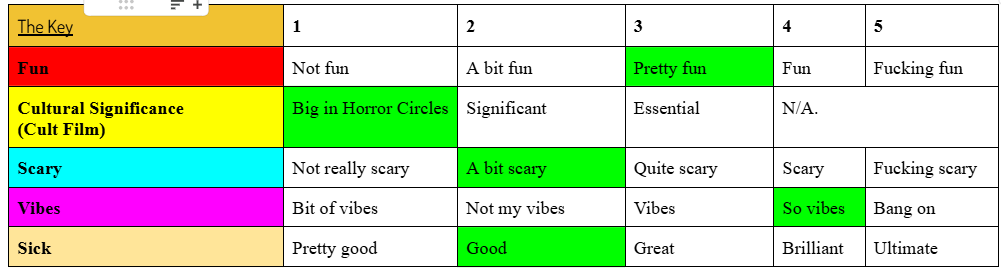
Total Score: 12/23.
We open on a nice relaxing river, with reeds and grasses swaying lightly. Strings play a pleasant tune over this rural scene. Then, a cut to a dark cell. A man with long, dank hair lies crumpled in a corner, alone and afraid. He is increasingly horrified by a quiet, fairly innocent humming.
Now we are thrown into the core setting of the film - a courthouse. It’s the distant past, the 17th century. Organ music blares.
Then suddenly, it’s today, the modern day. Confusing! An old man rambles on directly to us, the audience, giving us some context for what we’re seeing. There was a famous judge, George Jeffreys, ‘The Hanging Judge’, infamous for sentencing rebels against James II. This is whose courtroom we’ll be watching.
Speaking of, who’s in the room? Well, there’s the King’s Counsel (Peter Capaldi), the Judge, a jury, of course, and most importantly one Squire John Martin. He’s a killer, apparently, having slit the throat of a young girl, Anne Clark.
Anne is, first and foremost, a less-well off person than John. A peasant, if you will. She’s also intellectually disabled, which makes her murder all the more shocking.
Speaking of shocking, around this point in the film we get a brief cut to her throat being slit. It’s brilliantly surprising and sudden.
Anyway, we get some info on what happened before the murder. John attended a local Christmas party, and insisted Anne dance with him. He sings to her, and she sings back, though she is a bit tone-deaf.
Note - the Judge is extremely grating. It’s meant to add a comical tone to things, but it really put me off and took me out of it. Tonally odd - the whole thing is almost like a play.
During the story of the Christmas party, John spots a sodden, pale figure in the courtroom, who twitches for a second before disappearing. Spooky.
It’s made clear that Anne and John met many times after that party. She was smitten. However John is engaged. Eventually he begins ignoring the girl, and when he finally met her, it was the day she disappeared. We see the throat-slitting once more, here.
A significant point is made here, that though she disappeared on that day in May, she has been seen since. It is impossible to say whether these following sightings were of a live woman, though.
We learn that Anne was an orphan, and lived with the innkeeper. On the night of her disappearance, John spoke with the latter, and denied being involved with the girl. A patron of the tavern also speaks to John, asking to borrow his knife. He finds he can’t lend it, as it’s missing. Oh dear. The man sings a familiar tune, which sets John off, and then, hauntingly, they hear Anne singing it from outside. John, obviously appalled, begs them not to let her in. Obviously they do - but as she crosses the threshold the candles go out. When light is restored, there is no trace of her, bar a cupboard on the floor. John flees before the two others open it, but when they do something flies out of it like from a spring. Anne-like, ‘wrong’... with blood trailing behind it. This is definitely one of the film’s stronger moments.
Back in the courtroom, things have gotten mysteriously darker. We hear further details, a story from Late May. A man sitting by the pond in which they believe Anne was dumped, who spots the Squire searching for his knife, poking around in the muck with a stick. He was in visible distress. Key details come to light: The Squire had mentioned the knife to the man before this desperate search, the man had seen him with Anne in the past, and, well, that he had also, on the very day of the hunt for the knife, seen Anne bustle out of the water, limp and covered in a cloak.
John is given a chance to defend himself. It is shambolic. He sputters that he has been disturbed in prison by ‘noises and voices’. That the Judge, his relation, should take pity. He is quickly sentenced, and, defeated, asks if he may be allowed visitors. The Judge suggests a particular visitor may appear, and this upsets the squire greatly.
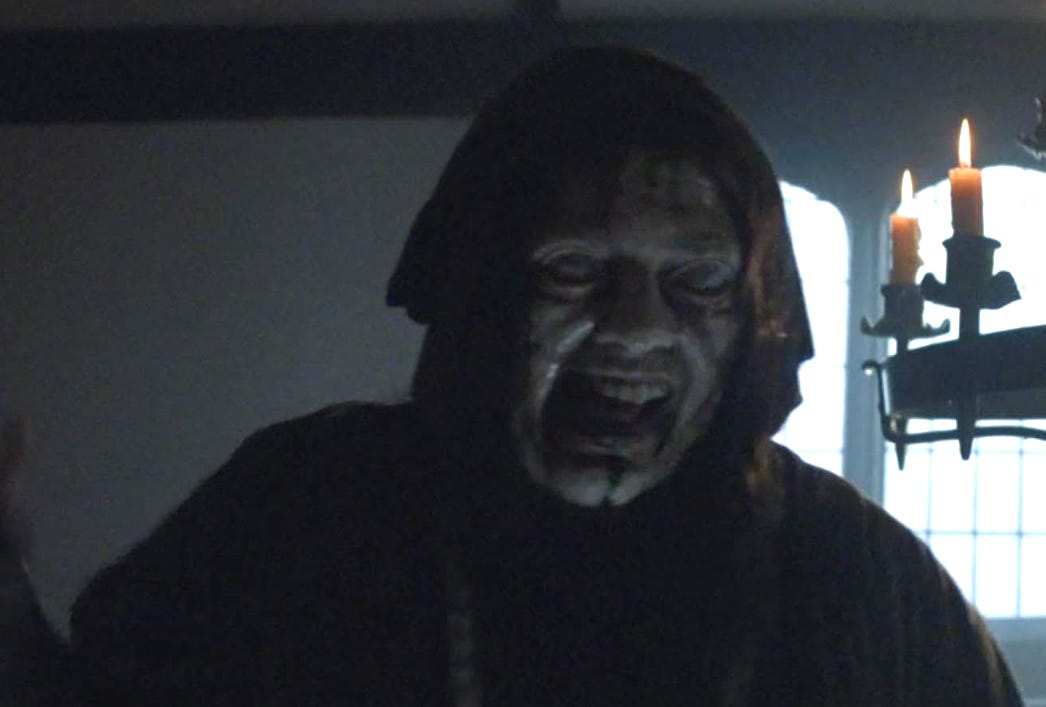
What upsets him even more is something about the jury. There are thirteen people in that group, and one of them has bulbous eyes, pallid skin, and is laughing and clapping with infectious glee. Only John can see this terrible individual.
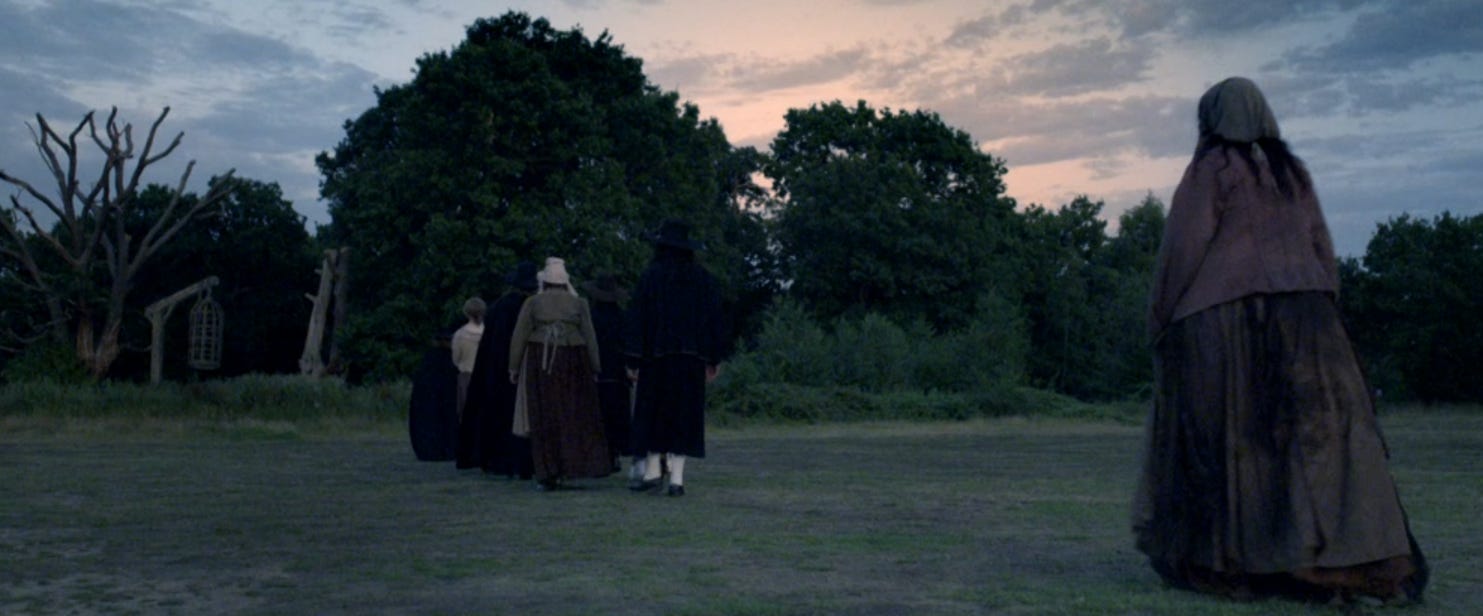
The old narrator shares that John’s burial place is bare and barren. He died in a gibbet, left to rot. We briefly watch a small crowd walk the killer to his fate, and shuffling along behind them is a young woman with a shambling gait.
There’s some really solid horror in this, but it’s so mixed. Is it a play? Is it a story being told to us? Darkly funny, or just dark? I feel the best bits, as you’d expect, are the supernatural moments, but other than this there is little to redeem the film. It looks good, but it feels low-budget in a way that many of the other low-budget Ghost Stories don’t. Anne is really the highlight of the piece.
Anyway, another big thank you George and James for the recommendations. It’s a pleasure to write something with you two in mind, and also good for me to watch something I’m not a complete fanatic about. Being open-minded is the best way to get the most out of horror.
As ever, thanks for reading,
Until next time,
H.E.