
BBC Ghost Stories For Christmas #7 - The Signalman (1976)
FOR GOD'S SAKE CLEAR THE WAY!

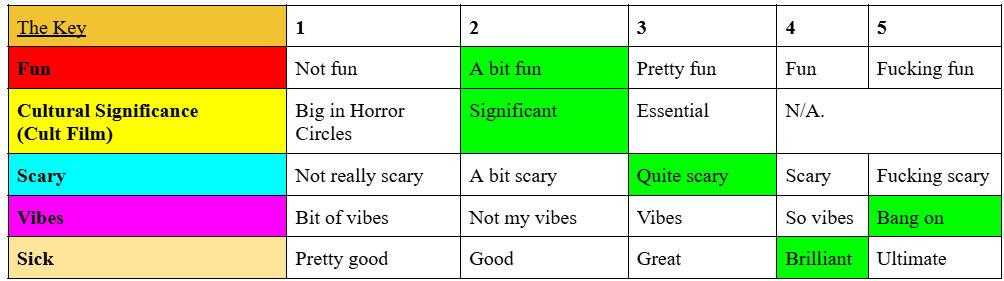
Total Score: 16/23.
This ghost story is a classic. I studied it at school, and then again at university. I even have a lovely little pocket edition on my shelf.
A fascinating fact about The Signalman (1886) is that the year before it was written, its author, Charles Dickens, was almost killed in a railway crash. His descriptions of this event are haunting, and he was deeply traumatised by it. Spookily, he died exactly five years after the accident (thanks Matthew Sweet for that fun fact).
The Signalman (1976) stars Denholm Elliot and Bernard Lloyd as our two leads. It has a runtime off around 40 minutes, with credits, and is scored (excellently) by Stephen Deutsch.
Almost immediately as we open we hear that iconic whistle and a steam trains chuffs into view. There is an almost dreamlike quality to the birds-eye shot of the tracks, nestled in that eerie little valley.
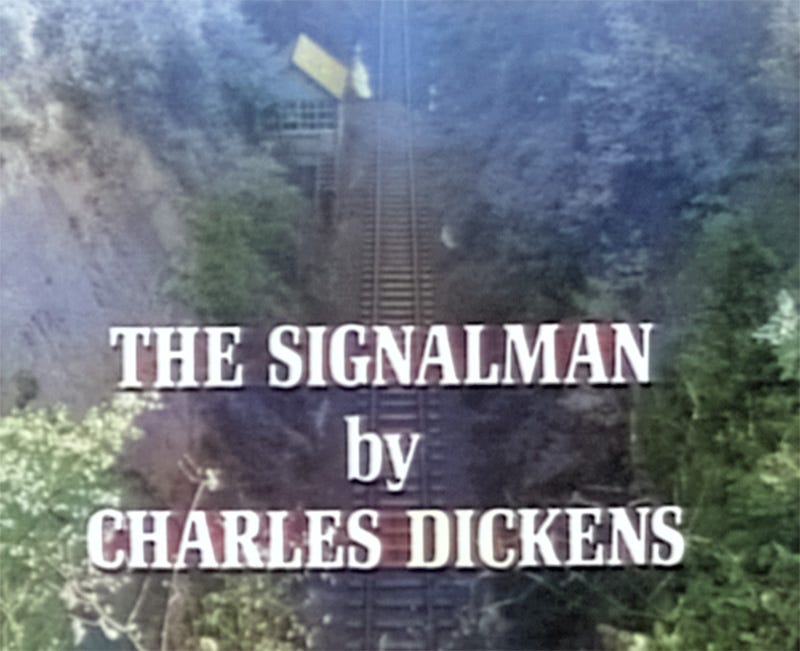
The delivery of the essential ‘Hallo, Below there!’ is perfectly delivered. The Signalman seems almost unaware of our unnamed protagonist (credited as The Traveller - a spectral title, if ever there was one). We get our second shot of a train before passing the three minute mark. Something to note is the subtlety of the music - almost more like noise than instruments. Indeed, a sound design person is credited at the end.
The Signalman is slow to reply to the Traveller’s persistent attempts at conversation. There is an uncanniness in his silence and stilted movements. He seems calmer after the Traveller states ‘I am simply a man’ - but remains unnerved that he finds him familiar. The tunnel looms continually black in the background.
Once the pair enter the Signalman’s hut, he is more open. It is warmer, and more contained. He shares that his work is endless, but before he can expand on his strains a distinctive bell rings out. The signal to move levers. Soon after conversation begins afresh, but then the Signalman stops dead. His eyes fly to the bell, still and silent (though we, the audience, suspect we heard a strange sort of vibration). The man peers out at the black tunnel, but there is nothing. He is visibly shaken, but makes conversation as best he can. He eventually comes out with this absolute banger:
‘My face would be in the sun by my mind would be down here in the dark and shadows…’
The bell rings again, and this time, everyone hears it. Another train passes by, gushing steam. Time wears on and the Traveller falls asleep. Eventually he awakes, but the silent bell tolls soon after, a hollow electric-like noise, but definitely not a ring. He and the Signalman discuss how terrible tunnel wreckages are. That fire in a tunnel generates a hellish furnace, and a chamber for screams to echo in. The industrial age has created Hell in it’s own right.
The Signalman has a deeply troubled and sad face. Our protagonist seems not to notice, but the man shares that next time he visits he will share more of his troubles. They set a date for the following night, and the Signalman asks he not call out again, whether on departure or arrival. He also queries, significantly, if the specific words the Traveller called at first were ‘conveyed’ to him, supernaturally. Fairly explicit for a ghost story, and pleasurably so.
There is a beautiful blueness in the night air. In a cosy inn, a whistle blows from far off, and that familiar chuff of an unseen engine follows. The Traveller half-dreams of the tunnel, of bells and of the signalman standing on the tracks, staring into the dark.
The morning arrives misty, and quickly turns into a freezing and foggy night. The pair meet again and the Signalman shares that on his first meeting, he thought our man was someone else, someone waving wildly down, gesturing ‘as if to say, for God’s sake clear the way’. Unnerving.
One night, as it turns out, the Signalman heard a voice yelling ‘Hullo! Below there!’ over and over. Upon investigation in the dark and the mist he spotted a figure by the signal light, but when he got close enough to really see clearly who this mystery fellow was, the man was gone. The tracks were empty and silent. Then, all his bells rang out and instruments moved of their own accord.
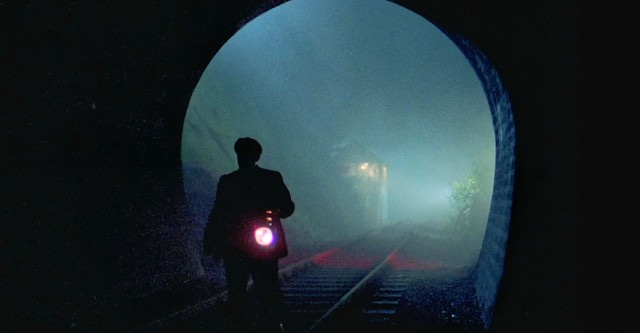
The Traveller looks to science for an explanation. Frayed nerves. Optical issues. The wind in the telegraph wires, murmuring like voices.
However, the Signalman continues, the real thing is that after this incident, a disaster happened in the tunnel. Smoke and coughing victims, metal torn and bent, flames licking the stone. People died.
A note to say, this film is brilliantly shot. Seriously good.
The Traveller writes this off as coincidence, but is cut off. There is more. 6 months after the accident, at dawn, the strange figure appeared again. Despite the Signalman beseeching it to answer his questions, he receives nothing, and then it reveals a ghastly face to him, screaming and socketless (with smoothed over eyes like a mannequin) and pale as a ghost. Suddenly, a train barrels past, and a woman throws herself off onto the tracks. She appears to be a young bride. The fall kills her instantly.
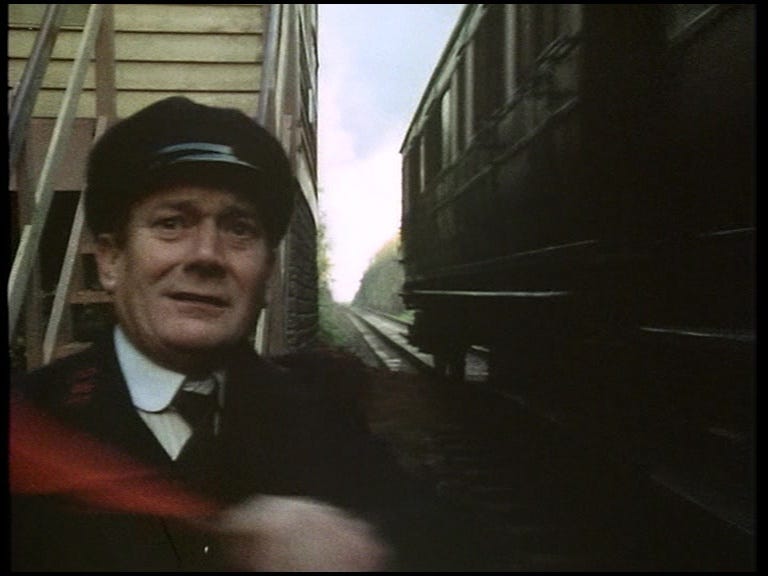
Of late, the ghost has begun to appear again. It waves a hand across its face. It calls continually for the Signalman to look out, it rings the bell in its unnatural way. The Traveller confirms that before he heard no such ring, but noticed the Signalman’s alarm. Apparently, the ghost’s ring is different, the man clarifies (and we know this to be true, we’ve heard it).
Like a complete cock, the Traveller suggests they look now for the ghost. It is stupid, and he deserves to be haunted. Of course, there is nothing there. Despite this, the Signalman continues to try to figure out what he can do, how to prevent a disaster. Eventually he is forced to listen. The Traveller reassures him that he is completely thorough in his job, and that he shouldn’t be expected to interpret these strange tidings. This is a fair point, and shockingly brings the Signalman some piece. He even gives thanks for the advice.
At the inn, the Traveller is less cool and collected. A hat and coat on a hook look ghostly as can be. Bells ring out in his mind, screams, flames licking at tunnel roofs. It is a disturbed and evil sleep and when he awakes the door is open and the hat and coat are displaced.
He begins the long walk to visit the Signalman.
Down at the tracks, a bell rings. A train approaches, but then, the soft humming of the bell. Even the Traveller hears it this time, and begins pelting forward. Someone cries out the dreaded words, and of course, the Signalman must investigate. In the tunnel is that strange figure, and the man is transfixed by it. He fails to heed the blaring whistle of the locomotive. It shares that horrible screaming face with him just as the Traveller reaches a place he can see the tracks - and see the inevitable collision.
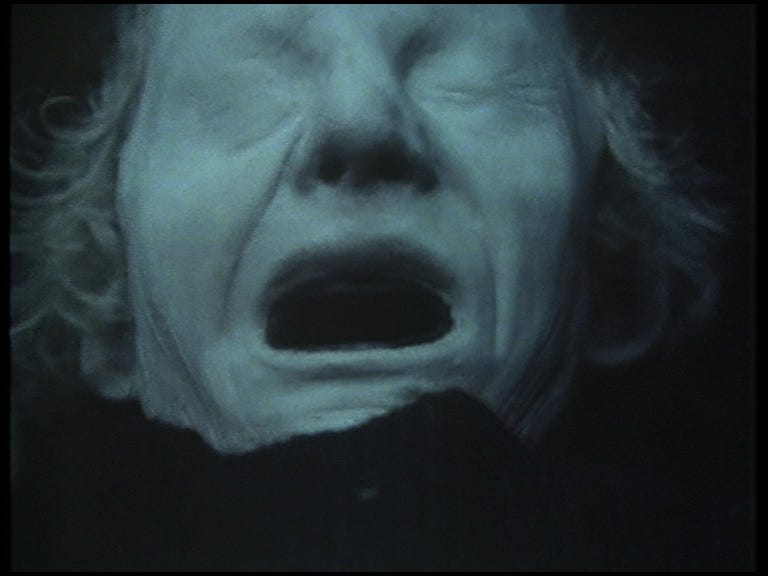
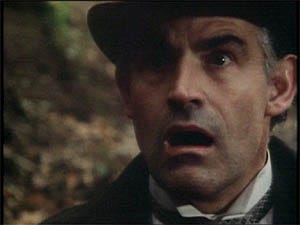
The driver is baffled. He called out, HULLO , BELOW THERE, LOOK OUT! The final delivery of this line is fucking distressing and really makes the film, frankly. The Traveller’s jaw drops, and, later, he wanders off alone into the mist.
A strange and quiet warbling plays over the credits.
Overall, this is an excellent short film. A strong adaptation, with unique ideas and beautiful cinematography and sound design - stylish and haunting. The Victorian fears around modern technology and the interesting use of harbinger ghosts - warnings, rather than punishments for misdeeds - make this story unique.
Below are some snippets of an academic essay I submitted in my final year of studies that briefly touch on the short story. The essay was titled: How does the ghost story explore and interrogate time, memory, and repetition?
They aren’t particularly clever or well-written bits, they just have some interesting talking points. Enjoy!
‘It is notable that the narrator initially considers the possibility he is talking to ‘a spirit, not a man’, after meeting the signalman.’ (Dickens, p93)
‘The fact that almost all the hauntings are recollections is undoubtedly an intentional choice by Dickens. Having our narrator be first-person diegetic allows for him to act as a receiver for the audience, picking up context both for and alongside us. It also allows for a degree of scepticism to permeate the story – at least until the end.’
‘To conclude, the importance of ‘what has gone before’ is high in this story. (Dickens, p100) Time, memory, and repetition are utilised as fundamentals of the ghost story to set up the ‘dreadful calamity’ of the signalman’s death and intensify the effectiveness of the hauntings, as well as to explore ideas about trauma, or “psychic shock”. (Dickens, p100).
Charles Dickens, ‘The Signalman’ (1866) in The Oxford Book of Ghost Stories ed. Michael Cox and R.A Gilbert (New York, Oxford University Press Inc, 1986), pp91-104.
Anyway, as ever, thanks for reading,
Until next time,
H.E.
Haven't seen this one yet. Will watch later!
I have to watch all of these ghost stories, but this one in particular seems really good!